

There's a particular cruelty to how protein needs and protein access tend to invert. The days when getting enough protein matters most — recovery days, travel days, long appointment days, days when the body is under stress — are often the days when preparing food feels impossible, appetite is lowest, and whatever's available is either wrong or unavailable. Junk Protein needs a blender and an appetite for something sickly sweet. On those days you have neither. A puck needs a mug and near-boiling water.
Most people who've been managing a changed body or a demanding schedule have a version of this story. You planned to eat well. Then the day happened. And by 3pm you're on a connecting flight or in a waiting room or sitting in a car between appointments, and whatever you'd intended to eat is behind you now.
The puck format didn't start as a solution to this problem, but it turns out to be exactly that.
Customers describe the same few hard days again and again.
The travel problem
Most protein products fail travel in one of three ways. Powders require a shaker or blender, both of which are impractical in an airport or on a plane. Bars and shakes raise questions at security when they're thick or liquid. And refrigerated products — carton broths, fresh anything — either can't come through security at all or require a cooler and planning that a hard day rarely accommodates.
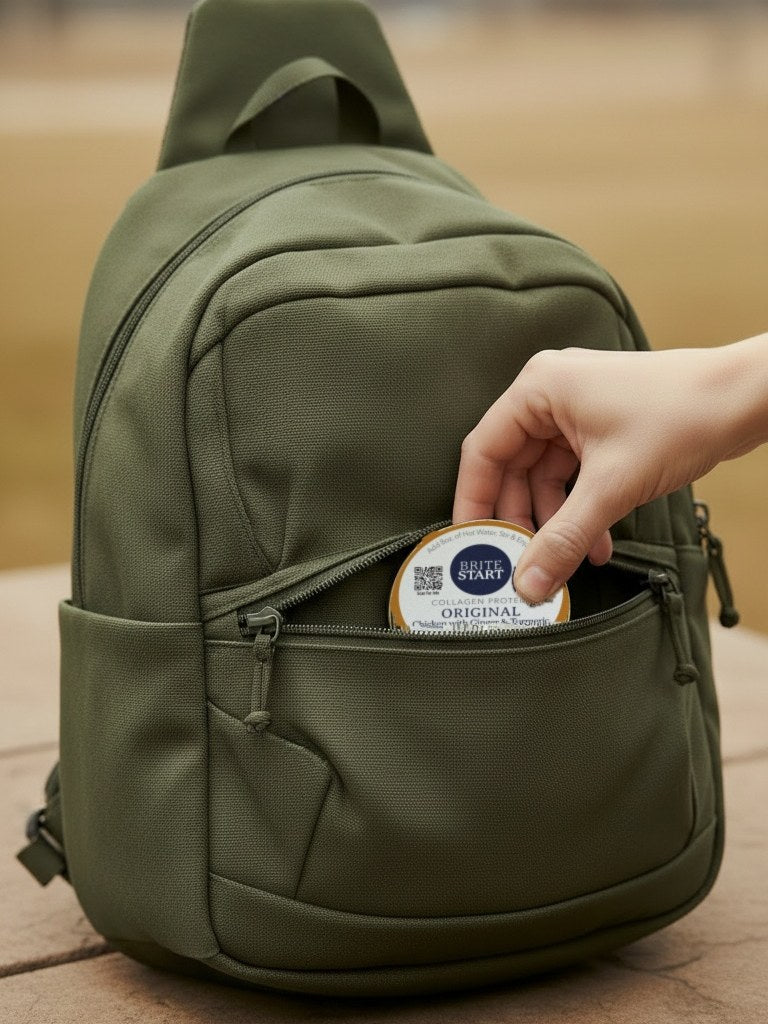
Our puck is a solid gel. TSA screens gels under the same 3.4-ounce rule as liquids, and each puck is 1.3 ounces. It doesn't require refrigeration before opening, and it's shelf-stable for a year, which means it travels in a bag or carry-on with no planning, no ice, and no timeline pressure.
The only thing needed to turn it into a full 20-gram protein serving is near-boiling water and a stir.
Hospital days and infusion days
This is a use case we didn't fully anticipate early on and that customers have taught us to take seriously. The day of a chemotherapy infusion, a post-op follow-up, a long diagnostic appointment — these are days when someone's body has an elevated protein need, when their appetite is often suppressed or unreliable, and when the food available in the building ranges from vending machine to mediocre cafeteria.
People who've started carrying pucks to these appointments describe the same practical reality: they know they're not going to eat a real meal, and they know their body needs protein. With a puck in the bag, all they need is near-boiling water somewhere in the building. No preparation, no mess, nothing that requires a kitchen or a refrigerator or even a plan.
The warm, savory format is specifically useful here. Sitting in a clinical setting and drinking something that tastes like food — like actual slow-simmered broth — is a different experience from choking down a sickly sweet protein shake under fluorescent lights.
Post-op appointments and follow-up periods
In the weeks and months after bariatric surgery, post-op appointments are frequent and often demanding. Getting dressed, getting to a clinic, waiting, the appointment itself — by the time someone is back in their car, they may not have eaten properly and may not have the energy to remedy that easily. With a puck in the glove compartment, twenty grams of protein is ready as soon as you reach a kettle.
Long flights and time zone disruption
Sleep deprivation, disrupted eating schedules, and the particular bodily indignity of long-haul air travel all conspire to make getting real nutrition difficult. Airplane food is what it is. Airport food is expensive, inconsistent, and often not the kind of thing someone managing a restricted diet or a particular medical protocol should be eating.
A puck rides along in a carry-on, ready for the first kettle you find after you land. For someone who needs 80 grams of protein a day, the first savory mug after a fourteen-hour flight covers a quarter of it.
Hard days are a logistics problem
What all of these scenarios have in common is that the barrier to getting protein was basically logistics, not motivation or knowledge. The Brite Start puck format removes almost all of them. No refrigeration, no blender, no timing, no cleanup, no planning horizon longer than remembering to throw one in a bag.
The hardest protein days get easier when the protein fits in your bag.
The information in this post is for educational purposes only. Nothing here is intended as medical advice or as a substitute for guidance from your healthcare provider. Always consult a qualified healthcare professional before making changes to your diet or health regimen, particularly if you are currently taking medication or recovering from surgery.


